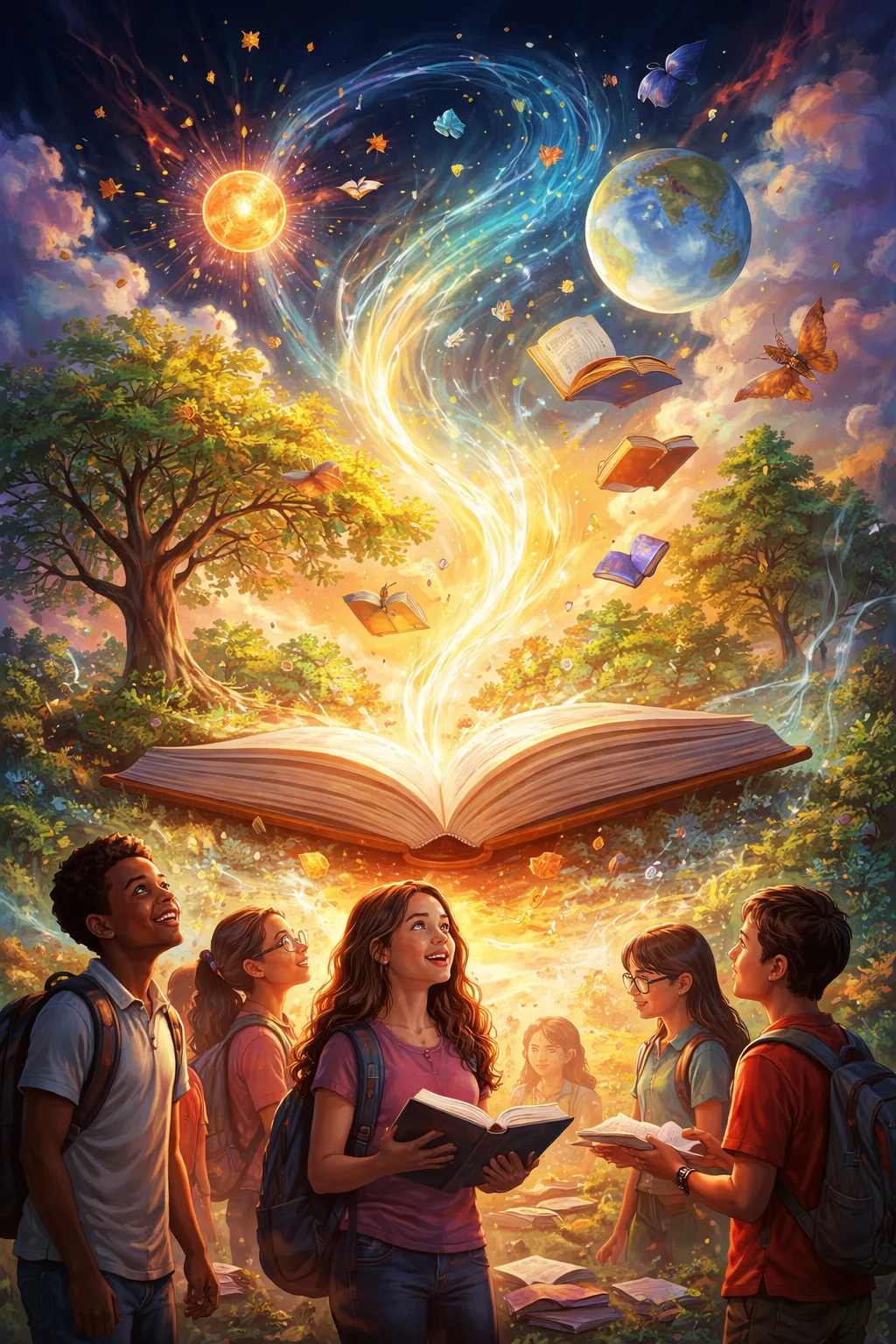
“The Lost Joy of Learning: Why Curiosity Must Return to Classrooms”
Archana Jha
“It is a miracle that curiosity survives formal education.” – Albert Einstein
I begin my thesis with a proposition I think is fairly pertinent. The purpose of education is to enlarge the scope of human imagination, to push the limits of thought, to ignite the power to inspire and be inspired, and to dream of bringing about a positive change in the ambient environment, for human society, the individual and ecology. The thread of human life weaves intricately through the maze of plant and animal life. This tapestry is inviolable; its destruction will deracinate us from the roots. The first principle we need to enshrine in the domain of education is respect and care for all life – human, plant and animal. That does bring me to the idea of ethics in education which has been served rather short shrift.
Having spent time teaching in the domain of both school and higher education,
experience has afforded me time to introspect about and observe the world of learning up close. And I see it warts and all. Students are taught from early on to focus on marks-oriented attainment. Have we paused to consider the damage we unleash when systems are driven by mere academic achievement in examinations? Degrees are mere pieces of paper unless we ignite the soul and mind of the learner. Today economics, politics, and competition determine career choice rather than personal desire or ethics. It is obvious there’s many a slip betwixt the cup and the lip. However, change can be ignited and thinking minds can be kindled to light the way ahead. And what lies ahead is way more vital than the past, howsoever perfect it may appear.
Lest I appear a pessimist let me posit the way forward. Let us try to re-discover how reading can transform our brains, thoughts, and culture. When we sit down to read a book, flip through a magazine, or read a text message on phone, do we ever stop to consider what an amazing thing the ability to read really is? Somehow, those squiggly little lines on the page – or the screen – magically come alive to form words and sentences. How on earth did our brains learn to do this? The story of human history, evolution, and neuroscience all tell the amazing story of how humans first learned to read, how reading restructures our brain, and why some brains struggle to read. They make the case that reading is a crucial part of our development as individuals and as a species, and that everyone deserves the right support to develop this skill.
My argument is that our educational establishments have swerved away from this magnificent capability of ours and shifted the focus on trivialities. The triviality of mere job- oriented study shifts the aim of pursuing education to transform life to the more mundane nitty gritty of earning well. Thus, we shift from living well to earning well, from wholeness and healing to brokenness and illness. Bittu Sehgal of Sanctuary fame once wrote an article titled, “The Earth has a Fever”, wherein he posited that to heal the human soul, the earth needs healing. It brings me back full circle to the power of stories, of story-telling, of literature and the liberal arts to ignite imagination, which Einstein held to be more potent and sacred than knowledge.
For example, when kids struggle with English spelling do we feel the need to interpolate with a story about how and why Mark Twain loathed English spelling? When students study the theory of relativity is there perhaps compassion to be taught by discussing what Einstein’s brain tells us about dyslexia and can Socrates’ life be an interpretation of the foreshadowing of today’s distrust of technology? Questioning points towards a healthy debate and dialogue about the world around us. It can be interwoven into the fabric of wholesome dissent in daily learning. Dynamism is a salubrious way to embrace the flux of diurnal cycles.
Today when the entire world is on the cusp of tremendous change while debating the power of AI and tech to transform life, we should reflect on the way we actually began reading and writing, and how our brains rearranged themselves to take on the challenge of reading.
Neuroscientists tell us that our brains are made up of billions of connected nerve cells, or neurons. These neurons have the amazing ability to restructure themselves and form new connections, depending on how we use them. Scientists call this phenomenon “neural plasticity.” When we first learned to read, new neural pathways formed in the brains that allowed them to detect and decode intricate visual symbols at rapid speed. If you remember what it was like to learn to read as a child, you will appreciate how powerful this transformation can be. From not knowing what to make of those strange markings on the page, your reading skills soon become so automatic that you just cannot not read the words in front of you. Neuroscientists have shown that, when humans look at alphabets we know, our brain’s activity nearly triples. Not only does it engage more of the visual areas, but it also fires up parts of the brain specialized in language processing, hearing, and abstract concepts.
May education systems power more dreamers to propel human imagination to create a world of true excellence – a cleaner, greener, slower paced, sensitive world of true liberty. If the alphabetic system allowed humans to record the spoken word and unspoken thought in all its complexity, is it impossible to unravel AI in all its complexity to use it as a tool to shape breakthroughs in human endeavor? If reading and writing allowed us to form fully novel thoughts, never before articulated, can the possibility of AI to solve human tangles at scale be unleashed?
Historical sagas hold up a fascinating story too. These sagas throw up endless examples of the power of human evolution to transform life in profound ways. In the period between 400 BCE to 600 AD India was in the throes of a crucial transitional era. The Vedic Period was giving way to the establishment of well-known international academic hubs such as ancient Nalanda and Taxila University. In the western world, the Greeks’ ability to read and write resulted in an exceptionally prolific period of art, culture, science, and politics from around 700 BCE to 600 AD – a period that, thanks to the alphabetic system, we can still read about today in all its glory and complexity.
Storytelling is boundless and its power to inform, evoke wonder and inspire change is miraculous. Would it not be a shame to close this world of exquisite treasure to only teach children to chase mega bucks in a staid world of money management and dodgy economics? Why cannot education policy shape a new era of internationalization of learning sans borders to explore a more egalitarian ethos? True change for the better can only be shaped in classrooms where the hurdles of modern hurly burly have yet to tarnish pristine minds capable of transcending the harum-scarum existence we have gifted ourselves.
Let us consider the humorous words of Mark Twain about the pains of English spelling:
“Beware of heard, a dreadful word
That looks like beard and sounds like bird.
And dead; it’s said like bed, not bead
For goodness sake, don’t call it deed!”
My point is learning can be fun and examinations rob students of the joy of learning. In the early years, children’s perception, attention, and conceptual systems develop at an incredible speed. That’s why reading to children at this time can have such a significant impact. When you read to young children, their speech becomes more sophisticated in the process. Beginning as novices, children start to develop a basic understanding of the phonological, orthographic, and semantic principles of a language. That is a marvel no AI can compete with. We never stop learning to read. At every stage there is a new decoding of symbol and idea. Reading initiates conversations between diverse minds. As young readers learn to recognize irony, metaphor, and different points of view, they start to connect what they are reading to their own stories, and to the world around them. Critical thinking develops. This helps shape new thought. Let me quote a gem of a tiny poem:
I Heard a Bird Sing
I heard a bird sing
In the dark of December
A magical thing
And sweet to remember:
“We are nearer to Spring
Than we were in September,”
I heard a bird sing
In the dark of December.
– Oliver Herford
As is evident, literacy is not enough. Retrieval of ideas, new connections, new skills can be tapped when we steer the child away from the mundane CBSE English level as the apex of attainment of knowledge.
Finally, I end with a quote from The Power of Bad by John Tierney and Roy Baumeister:
“When your mind is obsessing on a danger, overwhelm it with positive thoughts.”
Instead of obsessing about AI and its effect on education can we not steer towards a newer world where old methods of teaching are scrapped? One of my favourite storytellers Antoine de Saint-Exupery puts it rather succinctly:
“Building a boat isn’t about weaving canvas, forging nails, or reading the sky. It’s about giving a shared taste for the sea, by the light of which you will see nothing contradictory but rather a community of love.”
So, let us dream of conjuring a new dawn, a new education, a new fulfilment.